

As more and more talk and positive uses of cannabis are known, it seems like new cannabinoids keep popping up. To clear up the confusion, we’d like to review what is known so far about the different cannabinoids....
The two most popular cannabinoids—also known as the “main cannabinoids”—are THC and CBD.
Cannabinoids are compounds found in the Cannabis sativa plant. There are presently 104 variations[1] although this number keeps changing as scientists learn more and conduct better tests.
If you didn’t already know... the body naturally produces endocannabinoids (ECs) in the central nervous system – the Cannabis sativa plant also has its own endocannabinoid system, this is why it naturally links up with our system and supports where needed.
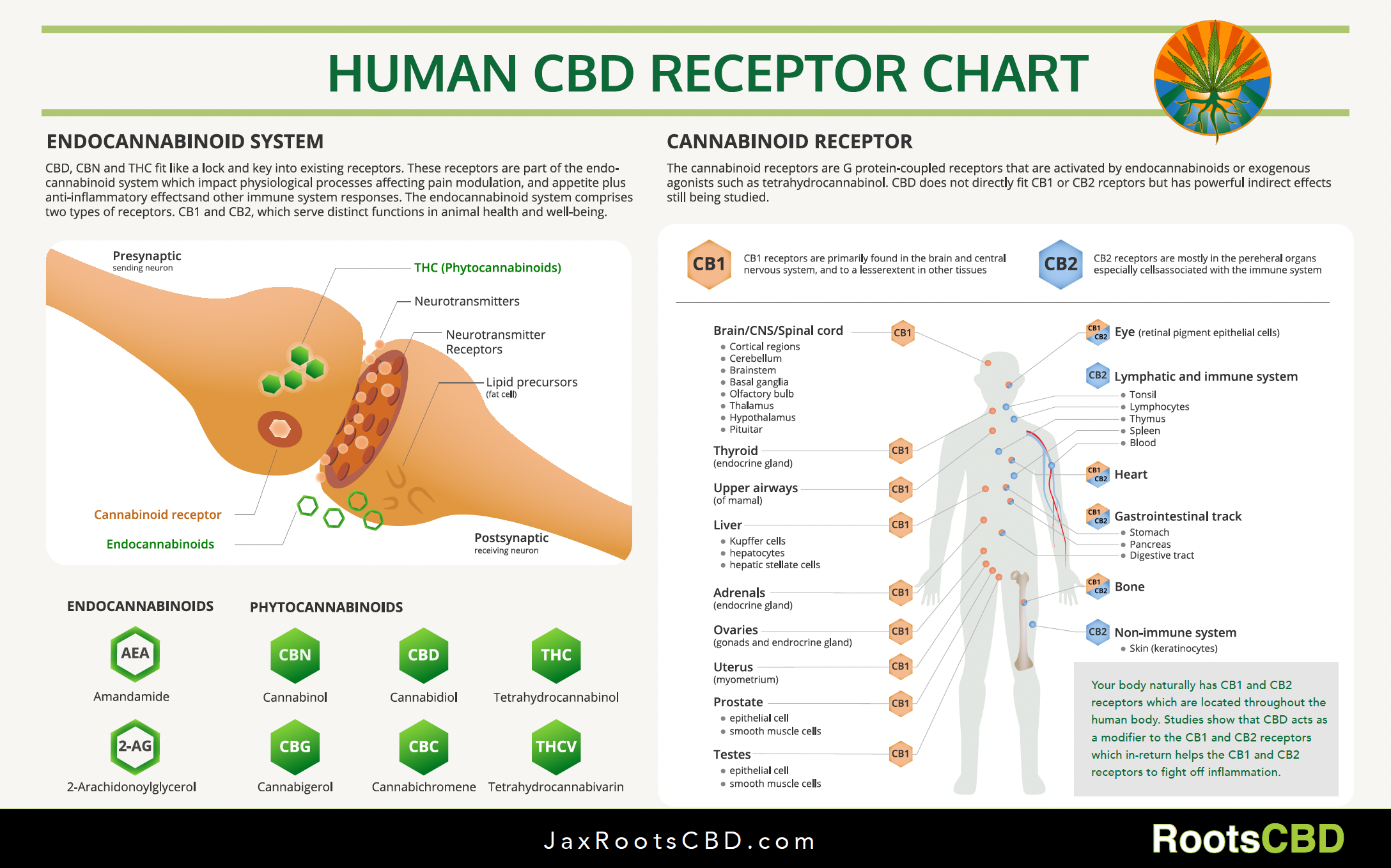
Our bodies are constantly trying to reach homeostasis, or internal balance, therefore endocannabinoids bind to different receptors in the body to relieve pain and dodge stress. [2]
It's all about the Decarboxylation!
de·car·box·yl·ation | \dē-kär-ˌbäk-sə-ˈlā-shən\
It's a mouthful, but before you get into the different cannabinoids, it's important to understand where it all begins - Decarboxylation.
Cannabinoids turn into different forms (aka synthesis) as they’re heated. The process of decarboxylation involves heating the raw form of cannabinoids to lose carbon dioxide molecules. From there, you have “activated” new cannabinoids like THC, CBD, and CBG!
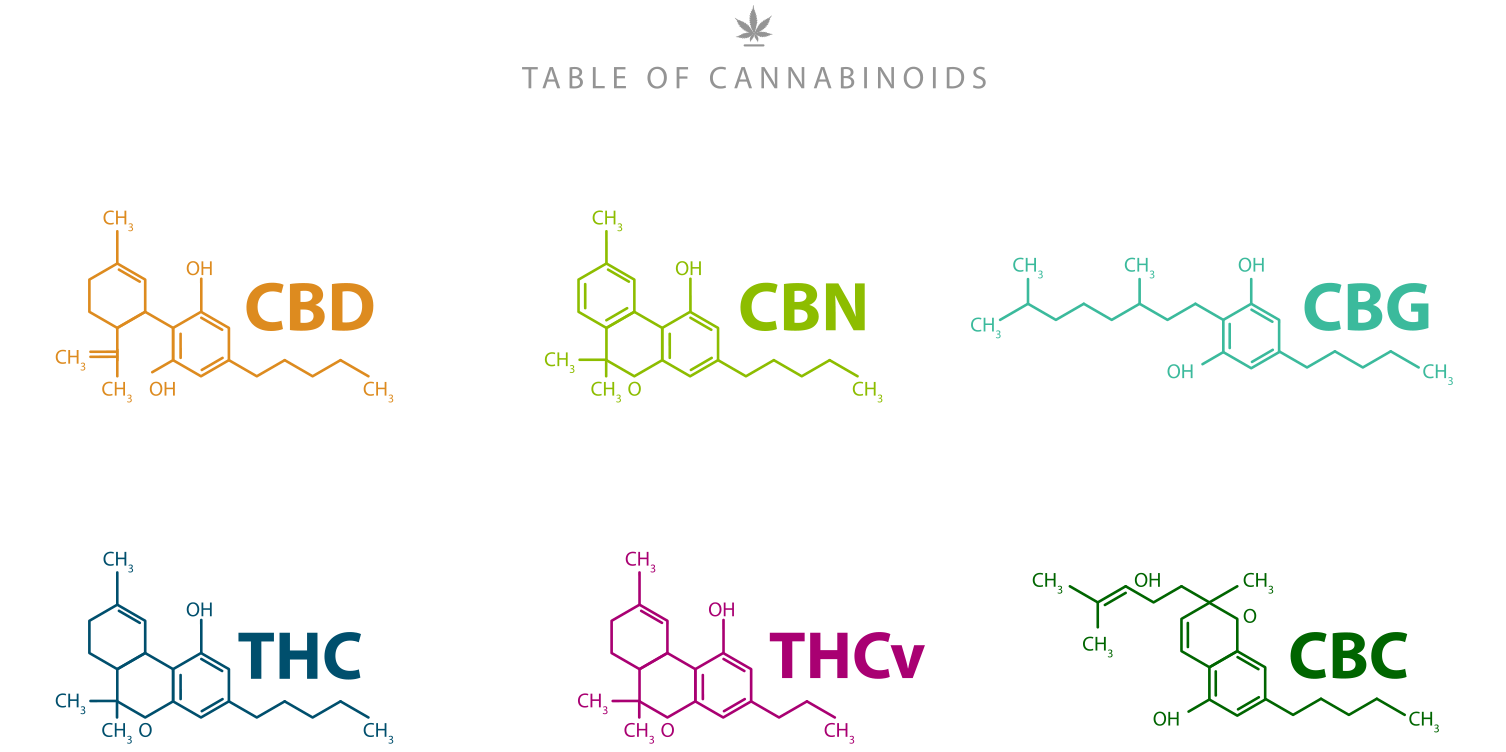
Most of the cannabinoids with more than three letters (CBGVA, for instance), are simply versions of the same cannabinoid with shorter chemical structures.[3]
Table of Cannabinoids
CBD (Cannabidiol)
The second most well known of the cannabinoids is Cannabidiol or CBD.
“Cannabidiol is a phytocannabinoid discovered in 1940. It is one of 113 identified cannabinoids in cannabis plants, along with tetrahydrocannabino (THC)l, and accounts for up to 40% of the plant's extract.” (Wikipedia)
Key features:
- non-psychoactive component in cannabis
- legal in almost every state (all but three)
- contains less than 0.3% THC in its hemp-derived form
Effects:
- Supports mood enhancement, anti-inflammation, wakefulness, sleep
Potential medical benefits:
- Treatment for anxiety, depression, insomnia, glaucoma, migraines [7]
THC (Tetrahydrocannabinol)
THC is likely the most popular cannabinoid because, well, some folks like to get “high”. Among the many benefits, it sure does make you feel happy and sociable.
“Anandamide plays a key role in why marijuana use results in increased happiness. It is a natural neurotransmitter and was discovered in the early 1990’s by Dr. Raphael Machoulam. These molecules play a role in memory, appetite, sexual drive, and emotion. Anandamide helps to regulate the body’s reaction to stress.” (Joyology)
Key features:
- the famous psychoactive cannabinoid.
- one of the two most present compounds found in cannabis
- legal in some states but isn’t legal federally
Effects:
- “High” or euphoric happy feeling
- dry mouth sensation “cotton mouth”
- increases appetite “munchies”
- makes people feel more sociable
- has anti-inflammatory properties
Potential medical benefits:
- Common treatment for anxiety, insomnia, migraines, nausea, pain, and cancer.[6]
CBN (Cannabinol)
CBN is the answer to helping you snooze more peacefully.
Key features:
- CBN is a non-intoxicating cannabinoid that’s synthesized from aged THC.
- People often associate CBN with sleep because the THC enhances its drowsy effect.
- However, CBN doesn’t come from “old” cannabis as some people think.
- It’s the CBN/THC combination that makes people sleepy [10].
Effects:
- Mildly sedative, antibacterial, neuroprotectant, appetite stimulation
Potential medical benefits:
- Treatment for insomnia, arthritis, glaucoma, and ALS.
CBGa (Cannabigerolic acid)
Key features:
- CBGa is nicknamed the “mother of all cannabinoids”[4] because every other compound is formed from it.
- It’s non-psychoactive before decarboxylation, after which CBGa produces THC, CBD, CBC, and CBG.
Effects:
- Mood enhancer, pain reliever, appetite stimulant, antibacterial, neuroprotective[5]
Potential medical benefits:
Treatment for cardiovascular disease, inflammatory bowel disease, diabetes, depression, osteoporosis, Huntington’s, Parkinson’s, and Alzheimer’s.
Sources
- https://www.ncbi.nlm.nih.gov/pmc/articles/PMC5741114/
- https://www.healthline.com/health/endocannabinoid-system#how-it-works
- https://www.leafly.com/news/cannabis-101/list-major-cannabinoids-cannabis-effects
- https://wayofleaf.com/education/exploring-cbga
- https://www.cannainsider.com/reviews/what-is-cbg/
- https://greencamp.com/decarboxylation/